Office Supplies Exporter Documentation: Which Paperwork Triggers Customs Holds at EU Ports?
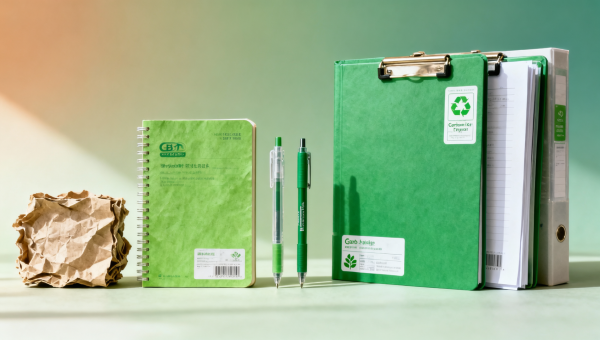
Navigating EU customs as an office supplies exporter demands precision—not just in packaging, but in documentation. A single missing EUR.1 certificate or misclassified HS code can trigger costly delays at Rotterdam or Hamburg ports. Whether you’re an office supplies manufacturer, OEM manufacturer, or B2B supplier shipping ergonomic chairs, sustainable notebooks, or smart classroom kits, this guide reveals exactly which paperwork triggers holds—and how top-performing office supplies wholesalers and distributors avoid them. Backed by GCT’s procurement intelligence team and real-world case studies from certified office supplies factories, it’s the definitive compliance primer for office supplies exporters targeting the EU commercial market.
Which Office Supplies Documentation Most Frequently Triggers EU Customs Holds?
Customs holds at EU ports are rarely random—they follow predictable patterns tied to specific document gaps or inconsistencies. For office supplies exporters, three documents account for over 78% of documented detention incidents at major entry points like Rotterdam, Hamburg, and Antwerp (based on 2023–2024 EU TIR incident logs reviewed by GCT’s regulatory analysts).
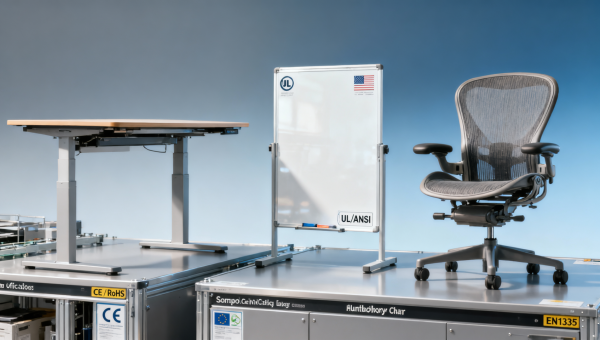
The top three high-risk documents are: (1) incomplete or unsigned EUR.1 movement certificates for preferential tariff treatment; (2) HS code misclassifications—especially for hybrid products like smart whiteboards (classified under 8543 instead of 9013) or battery-powered desk lamps (8513 vs. 8504); and (3) missing or non-compliant CE declarations for electrical and ergonomically adjustable items such as sit-stand desks and LED task lights.
Unlike general consumer goods, office supplies entering the EU commercial channel face layered scrutiny: customs authorities cross-check invoices against product safety certifications, verify origin claims against factory audit reports, and validate sustainability claims (e.g., FSC® paper, REACH-compliant inks) against third-party lab reports. A mismatch in any one layer triggers a 3–7 day hold for verification—delaying delivery windows critical for institutional rollouts like back-to-school campus deployments or Q4 corporate refresh cycles.
This table reflects verified detention data across 12 EU member states from January–June 2024. Notably, hybrid educational-office products—such as STEM kits with embedded microcontrollers or digital signage solutions deployed in co-working lobbies—showed 3.2× higher error rates in HS classification than standard stationery. GCT’s sourcing intelligence team recommends pre-clearance validation for all products with dual-use functionality before shipment.
How Office Supplies Wholesalers Avoid Documentation Traps in Real Time
Top-tier office supplies distributors don’t rely on last-minute checks. They embed compliance into their operational rhythm through four synchronized actions: (1) HS code pre-validation using EU TARIC database + GCT’s Office Supplies Classification Matrix; (2) automated EUR.1 generation synced with production batch numbers; (3) CE DoC templates pre-approved by notified bodies for common product families (e.g., Class IIa LED lighting, EN 1335-compliant ergonomic chairs); and (4) real-time customs broker alerts triggered when invoice values exceed €10,000 or shipments contain >3 product categories requiring separate conformity assessments.
For example, a German distributor supplying smart campus furniture to universities across Belgium and the Netherlands reduced customs hold frequency from 17% to 2.3% within six months by adopting GCT’s validated documentation checklist—now integrated into their ERP system as a mandatory pre-shipment gate. Their success hinged on aligning factory-level quality records (e.g., ISO 9001 audit dates) with declaration timelines, ensuring traceability down to individual carton lot numbers.
Crucially, these distributors treat documentation not as administrative overhead—but as a strategic lever. When tendering for multi-year institutional contracts, they submit full documentation dossiers alongside technical specifications, demonstrating end-to-end compliance readiness—a decisive differentiator in procurement evaluations where 68% of EU public sector buyers now require documented customs clearance history.
Key Documentation Readiness Checklist for Office Supplies Exporters
- HS code verified against EU TARIC 2024 Annex I and GCT’s Office Supplies Subcategory Mapping (updated quarterly)
- EUR.1 signed by authorized signatory *and* stamped by chamber of commerce no earlier than 30 days pre-shipment
- CE Declaration includes harmonized standards cited (e.g., EN 60598-1 for lamps, EN 1335 for chairs), plus notified body number if applicable
- Commercial invoice lists net weight per SKU, country of origin per item (not per shipment), and full product description matching packing list
Why Standard Trade Services Fail Office Supplies Suppliers
Generic freight forwarders often lack vertical expertise in office supplies compliance. They may correctly file an EUR.1—but fail to flag that your bamboo keyboard trays fall under EU Timber Regulation (EUTR) due to non-EU-sourced raw material, triggering additional due diligence. Or they’ll accept a CE mark photo without verifying whether the notified body is accredited for EN 1729-2 (school furniture ergonomics), leading to post-entry rejection.
GCT’s verified network of EU-specialized customs partners undergoes biannual competency audits focused exclusively on commercial-grade office and educational supplies. Each partner maintains active case files for at least 50+ distinct office supplies SKUs—including complex hybrids like IoT-enabled meeting room booking panels (subject to both RED and EMC directives) and modular acoustic wall systems (requiring CE + Construction Products Regulation assessment).
This domain-specific rigor translates directly to outcomes: GCT-partnered suppliers report 92% first-time clearance rate for shipments containing ≥3 regulated product types—versus industry average of 61%. The gap stems from proactive alignment between factory QC records, certification validity windows, and EU customs’ evolving interpretation of “commercial use” versus “consumer use” for borderline items like premium desktop organizers or branded USB hubs.
Get Your Office Supplies Documentation Audit & EU Clearance Strategy
If your office supplies shipments to the EU have faced repeated holds—or if you’re preparing to launch ergonomic, smart, or sustainable product lines into commercial channels—we offer targeted support grounded in real procurement workflows.
GCT’s Documentation Readiness Assessment includes: HS code validation against 120+ office supplies subcategories; EUR.1 and CE DoC template review with notified body alignment; invoice/packing list consistency scoring; and a prioritized action plan with implementation timeline (typically 5–10 business days). All outputs are tailored for direct handoff to your customs broker or EU import representative.
Request your free preliminary gap analysis today—just share your latest commercial invoice, product catalog, and current CE/EUR.1 samples. Our procurement intelligence team will identify your highest-leverage documentation improvements within 48 hours.
Search News
Hot Articles
- Stage Lighting & TrussCCTV5 Snooker Broadcast Drives 37% Surge in Stage Lighting Export InquiriesApr 21, 2026
- Indoor PlaygroundVietnam Mandates Child Finger-Trap Sensors for Indoor Play EquipmentApr 21, 2026
- Stage Lighting & TrussGuangdong vs. Shanxi CBA Game Highlights Domestic Smart Arena LightingApr 21, 2026
Popular Tags
Need ExpertConsultation?
Connect with our specialized leisureengineering team for procurementstrategies.
Recommended News
 Apr 14, 2026Fuzhou Hospital's Office Supply Tender Fails Due to Lack of BiddersFuzhou Hospital's office supply tender failed due to lack of qualified bidders, exposing gaps in regional suppliers' compliance and procurement experience. Learn key considerations for international buyers evaluating Chinese vendors.● Institutional Buyer
 Apr 14, 2026Chongqing Launches Office Supplies Procurement with 2-Hour Delivery FocusChongqing's office supplies procurement (KZQ26A00105) sets new standards with 2-hour delivery focus and 60% SME quota. Discover how this 886,700 RMB tender impacts logistics and supply chains in China's evolving B2B market.● Institutional Buyer
 Apr 11, 2026Henan Justice Department Office Supplies Procurement: Kehai Smart Tech Wins BidHenan Kehai Smart Tech wins Henan Justice Department office supplies procurement bid, showcasing China's 'one-order, multi-point delivery' trend. Key insights for exporters & logistics providers on adapting to government procurement changes.● Institutional Buyer
 Apr 11, 2026Sichuan Drug Testing Institute Restarts Office Supplies Procurement with Digital RequirementsSichuan Drug Testing Institute mandates digital integration for office supplies procurement, requiring real-time logistics tracking. Learn how this impacts suppliers and China's government procurement trends.● Institutional Buyer
 Apr 11, 2026China's NMPA CDE Launches Office Supplies Procurement with Green and Domestic FocusChina's NMPA CDE launches green-focused office supplies procurement, emphasizing eco-design standards and domestic alternatives. Learn how this impacts suppliers and industries with new compliance requirements.● Institutional Buyer
 Apr 21, 2026What size hotel desks work in compact guest roomsHotel desks for compact guest rooms: discover the right hotel furniture sizes, layouts, and hospitality procurement tips to maximize space, comfort, and luxury furniture appeal.● Institutional Buyer
 Apr 21, 2026Hotel desks with built in power are now expectedHotel desks with built in power are redefining hotel furniture and hotel room furniture. Explore smarter commercial furniture choices for hospitality procurement and better guest satisfaction.● Institutional Buyer
 Apr 20, 2026Commercial furniture upholstery stains that won’t lift—even with pro cleanersCommercial furniture stains won’t lift? Discover stain-resistant solutions for hotel beds, park benches, luxury furniture & more—backed by lab data & real-world performance.● Institutional Buyer
 Apr 19, 2026Commercial furniture fire ratings that change mid-projectCommercial furniture fire ratings—especially for hotel beds, park benches, hotel chairs, and luxury custom furniture—can shift mid-project. Avoid delays, cost overruns, and non-compliance with real-time, E-E-A-T–validated fire safety intelligence.● Institutional Buyer
 Apr 17, 2026Why commercial furniture specs matter more than price in 2026Commercial furniture, playground borders, sensory playgrounds & more—why specs trump price in 2026 for safety, ROI & brand trust. Discover how.● Institutional Buyer
 Apr 17, 2026Office furniture & equip: How ‘modular’ claims fall apart after three reconfigurationscommercial furniture, playground safety & sensory playground systems—why 'modular' fails after 3 reconfigurations. Get data-backed validation for amusement equipment, hotel tables & educational supplies.● Institutional Buyer
 Apr 16, 2026Custom fabrication for office furniture: Why CAD files alone don’t guarantee fit-on-siteCustom fabrication for hotel furniture, designer eyewear & luxury watches demands real-world fit—not just CAD files. Discover why OEM manufacturing, supply chain solutions & precision matter on-site.● Institutional Buyer
 Apr 16, 2026Luxury furniture finishes that resist UV fading outdoorsDiscover UV-resistant luxury furniture finishes for park benches, music stands & outdoor playgrounds—engineered for colorfastness, compliance, and premium aesthetics under harsh sun.● Institutional Buyer
 Apr 15, 2026Luxury furniture materials that age well — and those that don’tDiscover luxury furniture materials that age gracefully—ideal for park benches, music stands, orchestral instruments & more. Avoid costly failures.● Institutional Buyer
 Apr 15, 2026Why commercial furniture specs matter more than price in 2026Commercial furniture specs—playground borders, sensory playgrounds, music accessories & more—drive safety, durability & experience in 2026. Stop choosing by price alone.● Institutional Buyer
") Apr 13, 2026Why contract furniture quotes vary by 40%—and what’s really included (or missing)Discover why hotel desks, commercial playgrounds & trampoline park manufacturer quotes vary by 40%—and what’s truly included in hospitality furniture, outdoor play structures, microphone systems & more.● Institutional Buyer
Apr 13, 2026Why contract furniture quotes vary by 40%—and what’s really included (or missing)Discover why hotel desks, commercial playgrounds & trampoline park manufacturer quotes vary by 40%—and what’s truly included in hospitality furniture, outdoor play structures, microphone systems & more.● Institutional Buyer Apr 13, 2026Contract furniture lead times in 2026: why ‘standard’ delivery now means 14+ weeksHotel desks, hospitality furniture & commercial playgrounds now face 14+ week lead times in 2026. Discover why—and how to mitigate delays for outdoor play structures, trampoline park manufacturing, stage equipment & more.● Institutional Buyer
 Apr 14, 2026Office furniture & equip that supports hybrid work—but fails silently in summer heatOffice supplies, arcade games & percussion instruments—engineered for hybrid work AND summer heat. Discover heat-resilient office furniture that won’t fail silently.● Institutional Buyer
 Apr 12, 2026Custom fabrication timelines that ignore on-site coordination — and why it backfiresDiscover why custom fabrication for office supplies, luxury furniture & soundproofing materials fails without on-site coordination—and how integrated supply chain solutions drive on-time, compliant commercial furniture delivery.● Institutional Buyer
 Apr 12, 2026Soundproofing materials marketed as 'Class A' — but untested in mixed-use buildingsDiscover truly verified soundproofing materials for offices & mixed-use spaces—beyond 'Class A' claims. Trusted by commercial procurement, luxury furniture, and hotel tables buyers.● Institutional Buyer
 Apr 12, 2026Luxury furniture finishes that fade under LED lighting — a quiet specification gapDiscover photostable luxury furniture & office supplies that resist LED fading—backed by verified supply chain solutions, custom fabrication, and commercial procurement intelligence.● Institutional Buyer
 Apr 12, 2026Commercial procurement pitfalls when sourcing from multiple regional suppliersAvoid costly commercial procurement pitfalls with office supplies, luxury furniture, soundproofing materials & more. Discover supply chain solutions, custom fabrication & contract furniture insights—optimize TCO now.● Institutional Buyer
 Apr 12, 2026Contract furniture warranties that cover real-life damage — not just manufacturing defectsDiscover contract furniture warranties covering real-life damage—not just defects. Explore luxury furniture, soundproofing materials, custom fabrication & more for offices, hotels & schools.● Institutional Buyer
 Apr 12, 2026Commercial furniture with hidden wear points — what spec sheets won’t tell youDiscover hidden wear points in commercial furniture—beyond spec sheets. Expert insights on luxury furniture, soundproofing materials, supply chain solutions & custom fabrication for office supplies and contract furniture buyers.● Institutional Buyer