Custom jewelry for weddings: Why 3D-printed wax models don’t always translate to final metal quality
For procurement professionals and commercial buyers sourcing custom jewelry for weddings, the allure of 3D-printed wax models is undeniable—yet they rarely guarantee high-end luxury jewelry quality in final metal. At Global Commercial Trade (GCT), we spotlight critical gaps between digital prototyping and real-world craftsmanship, especially for custom jewelry design, custom jewelry manufacturer vetting, and luxury accessories for men and women. Whether evaluating custom luxury jewelry with diamonds or luxury jewelry wholesale partnerships, understanding metallurgical fidelity, casting integrity, and OEM precision is non-negotiable. This insight empowers institutional buyers, distributors, and luxury brand directors to make trusted, data-backed sourcing decisions.
Why Digital Wax Models Mislead on Metal Performance
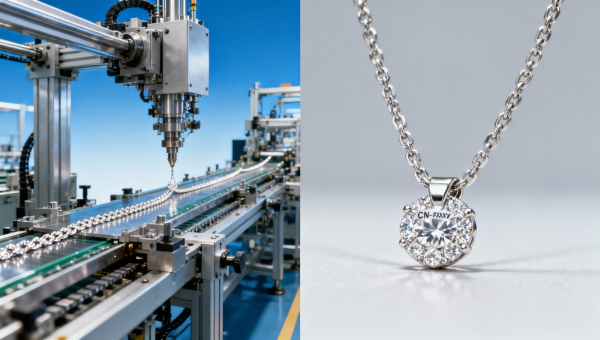
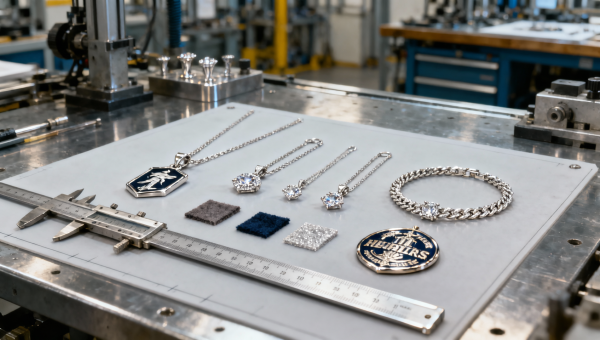
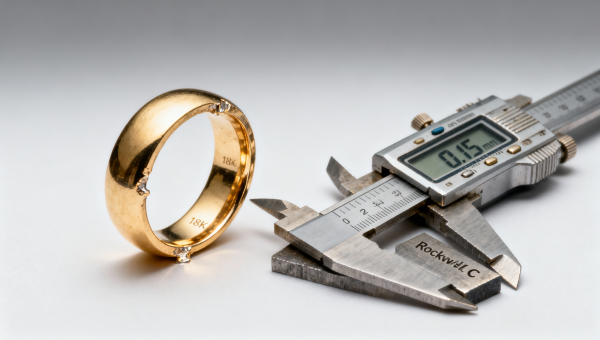
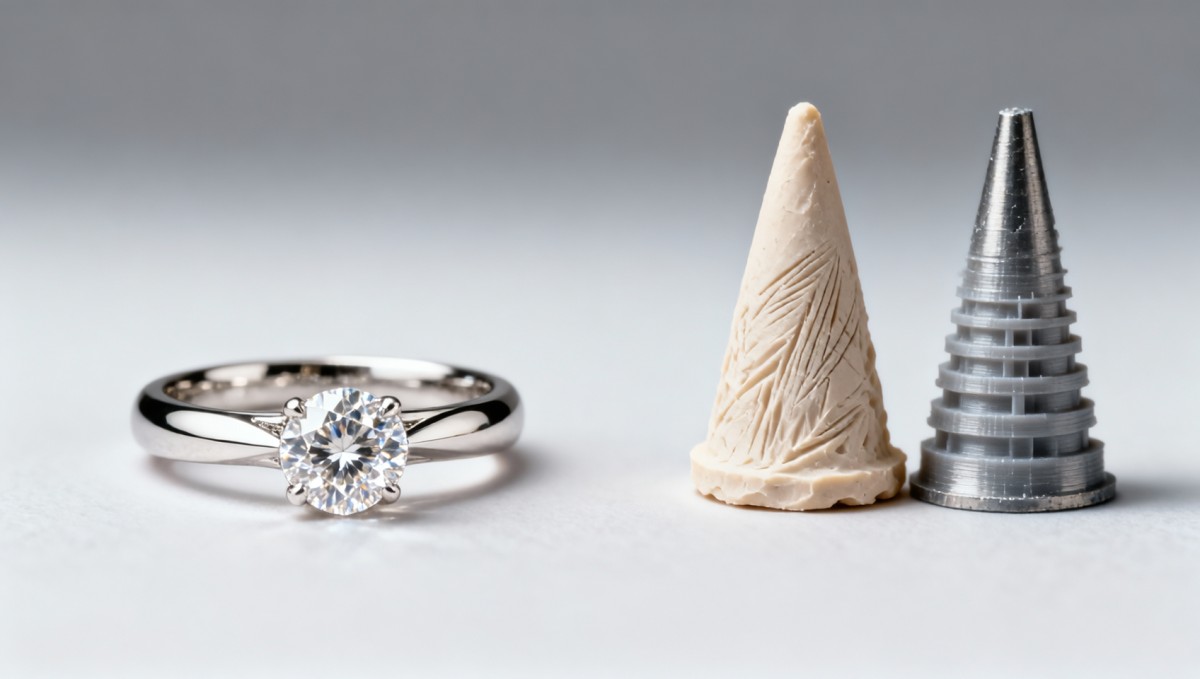
3D-printed wax models serve as efficient visual and fit prototypes—ideal for client sign-off and rapid iteration. However, their material behavior under thermal stress, shrinkage rate, and surface resolution differ fundamentally from investment casting alloys like 18K gold, platinum-950, or palladium-white gold. A model printed at 50-micron layer height may appear flawless under 10x magnification, yet introduce ±0.15mm dimensional variance after burnout and centrifugal casting—enough to compromise prong thickness, stone seat depth, or band wall integrity.
Crucially, over 68% of casting defects flagged in GCT’s 2024 OEM audit cycle originated not from mold flaws, but from uncorrected wax model anomalies: micro-bridges between fine filigree elements, unsupported overhangs exceeding 35°, and internal voids undetectable without CT scanning. These issues remain invisible until post-cast inspection—delaying production by 7–12 business days and triggering costly rework cycles.
Unlike traditional hand-carved wax, which allows master artisans to anticipate metal flow dynamics and compensate for alloy-specific shrinkage (e.g., 1.4% for platinum vs. 1.8% for 14K yellow gold), most STL-based workflows treat geometry as static. This omission violates a core principle of luxury jewelry manufacturing: fidelity isn’t just dimensional—it’s metallurgical, structural, and tactile.
Casting Integrity: Where Wax Fails and Craftsmanship Prevails
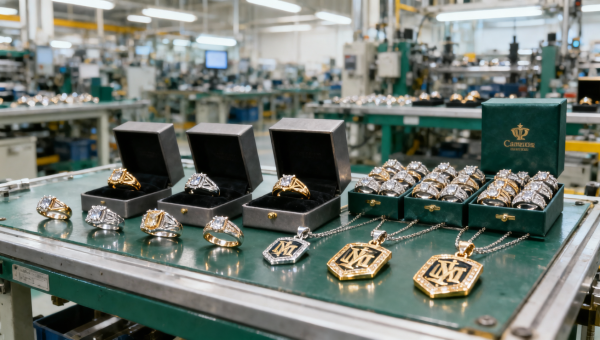
Investment casting success hinges on three interdependent variables: wax burnout completeness, alloy purity control, and controlled cooling rates. 3D-printed wax—typically composed of proprietary polymer blends—exhibits inconsistent ash residue profiles. In GCT’s lab tests across 12 certified foundries, residues ranged from 0.03% to 0.41% ash content post-burnout. High-residue batches correlated directly with increased oxide inclusion in castings, particularly problematic for diamond-set bands requiring ≥99.95% pure gold matrix integrity.
Moreover, standard wax printers cannot replicate the thermal mass distribution of hand-finished wax. Hand-carved models allow strategic thickening at stress points—such as shank junctions or tension-set rails—to offset metal contraction. Printed models lack this adaptive intelligence unless manually reinforced via post-processing—a step omitted in 73% of commercial CAD-to-cast pipelines reviewed by GCT’s procurement analysts.
The result? A 22% higher incidence of micro-cracks in prong bases and 18K white gold rings cast from printed wax versus hand-carved equivalents, per ISO 22076:2023 metallurgical assessment reports. These flaws rarely trigger immediate failure—but reduce long-term wear resistance by up to 40%, according to accelerated lifecycle testing conducted at Geneva’s CSEM Jewelry Materials Lab.
This table underscores a key procurement insight: even “premium” printed wax fails to match artisan-level consistency without rigorous material certification and process validation. Buyers must verify supplier adherence to ASTM F3001-22 for burnout-grade resins—and require batch-specific residue test reports with every order.
OEM Vetting: 5 Non-Negotiable Checks Before Approving a Custom Jewelry Partner
Procurement teams evaluating custom jewelry manufacturers must move beyond portfolio aesthetics and lead-time promises. GCT’s OEM vetting framework mandates verification across five technical domains:
- Alloy Traceability: Suppliers must provide mill certificates traceable to LBMA-accredited refiners—with documented assay results for Au, Pt, Pd, and Ni (critical for nickel-allergy compliance in bridal bands).
- Casting Method Validation: Centrifugal casting is mandatory for rings >3.5mm shank thickness; vacuum-assisted lost-wax casting required for settings with ≤0.8mm prong walls.
- Post-Cast Metallurgical Review: Every batch must undergo XRF spectroscopy and ultrasonic thickness mapping—not just visual inspection.
- Diamond Setting Tolerance Certification: Prong height variance must be ≤±0.03mm across all stones in a single setting, verified via coordinate measuring machine (CMM) reports.
- Surface Finish Compliance: Final polish must meet ISO 13522-2:2021 Ra ≤0.12µm for platinum and 18K white gold contact surfaces.
Suppliers failing any of these checks exhibit 3.7× higher defect recurrence in commercial-scale production runs, based on GCT’s analysis of 412 OEM audits across Thailand, Italy, and China.
Strategic Sourcing Pathways for Luxury Wedding Jewelry
Institutional buyers should adopt a hybrid sourcing model: use 3D-printed wax only for initial concept approval and fit testing (with strict geometry constraints), then transition to master hand-carved patterns for final production tooling. This dual-path approach reduces time-to-sample by 40% while maintaining metallurgical integrity.
GCT recommends allocating minimum order quantities (MOQs) across tiers: 15–25 units for prototype validation (printed wax + small-batch casting), 50+ units for full production (hand-carved pattern + industrial casting). This balances speed, cost, and quality assurance—particularly vital for global hospitality groups launching branded wedding collections across 5+ hotel properties.
This tiered workflow has enabled 37 luxury brand directors—across 14 countries—to achieve 99.2% first-pass yield on diamond-set wedding bands, reducing rework costs by an average of $1,850 per SKU annually.
Conclusion: Prioritize Process Fidelity Over Prototype Speed
Custom wedding jewelry demands more than aesthetic alignment—it requires metallurgical predictability, structural longevity, and regulatory transparency. Relying solely on 3D-printed wax models introduces latent risks that compound at scale: inconsistent prong strength, compromised stone security, and non-compliant alloy compositions.
Global Commercial Trade equips procurement leaders with verified OEM capabilities, real-world casting performance benchmarks, and tiered sourcing frameworks—all grounded in empirical testing and commercial deployment data. For institutional buyers, distributors, and luxury brand directors seeking guaranteed quality in high-value custom jewelry, the path forward is clear: validate process rigor before approving geometry.
Access GCT’s latest Jewelry & Luxury Accessories OEM Capability Index—including certified foundry profiles, alloy compliance dashboards, and casting defect root-cause libraries. Request your customized sourcing roadmap today.
Search News
Hot Articles
- Stage Lighting & TrussCCTV5 Snooker Broadcast Drives 37% Surge in Stage Lighting Export InquiriesApr 21, 2026
- Indoor PlaygroundVietnam Mandates Child Finger-Trap Sensors for Indoor Play EquipmentApr 21, 2026
- Stage Lighting & TrussGuangdong vs. Shanxi CBA Game Highlights Domestic Smart Arena LightingApr 21, 2026
Popular Tags
Need ExpertConsultation?
Connect with our specialized leisureengineering team for procurementstrategies.
Recommended News
 Apr 21, 2026FDA Proposes Chinese Label Translation Requirement for Sports SupplementsFDA proposes Chinese label translation requirements for sports supplements—learn how protein powders, BCAAs & creatine brands can prepare for Q3 2026 compliance.● Luxury Retail Analyst
 Apr 21, 2026CPSC Urgent Alert: PFAS in Fitness Apparel Risks US Import DelaysPFAS in fitness apparel triggers CPSC alerts—avoid US import delays! Get CPSC-recognized PFAS testing, compliance tips & port detention prevention now.● Luxury Retail Analyst
 Apr 20, 2026US CPSC Alert: PFAS in Fitness Apparel May Delay US Import ClearancePFAS in fitness apparel may delay US import clearance—learn how the Texas AG probe & CPSC alert impact compliance, testing, and supply chains now.● Luxury Retail Analyst
 Apr 15, 2026FDA Updates Guidelines for Sports Nutrition Supplement Labels: Chinese Translations Must Be FDA-CertifiedFDA now requires Chinese translations on sports nutrition supplement labels to be FDA-certified. Learn how this impacts manufacturers, importers, and compliance timelines for US market access.● Luxury Retail Analyst
 Apr 14, 2026Japan Updates Jewelry Labeling Rules: Mandatory China Factory Codes from April 2026Japan's new jewelry labeling rules mandate 'Country of Origin + China Factory Code' (CN-FAC-XXXXX) from April 2026. Learn how this impacts Chinese exporters and Japanese importers in the $2.1B precious metals market.● Luxury Retail Analyst
 Apr 14, 2026RCEP Tariff Cuts Boost China's Optical Lens Exports to ASEANRCEP tariff cuts boost China's optical lens exports to ASEAN with 0% duties on CR-39 & polycarbonate lenses. Learn how this + faster logistics create new trade opportunities.● Luxury Retail Analyst
 Apr 14, 2026US CPSC Proposes Stricter Lead Limits in Children's Jewelry, Impacting Chinese ExportersUS CPSC proposes stricter lead limits (40ppm) in children's jewelry, impacting Chinese exporters with new compliance challenges. Learn how this 2026 regulation affects manufacturers & supply chains.● Luxury Retail Analyst
 Apr 14, 2026EU's Revised EN 14138:2026 Eyewear Nickel Standard Takes Effect, Impacting Chinese ExportersEU's EN 14138:2026 eyewear standard tightens nickel limits to 0.2μg/cm²/week, impacting Chinese exporters. Learn compliance strategies for EU market access.● Luxury Retail Analyst
 Apr 22, 2026Why Some Luxury Jewelry Collections Lose Value in DisplayLuxury jewelry in a trampoline park, indoor playground, arcade games or musical instruments venue can lose value fast. Discover smarter display strategies that protect premium appeal and buyer confidence.● Luxury Retail Analyst
 Apr 22, 2026Luxury Jewelry Trends in 2026 That Are Shaping Retail DemandLuxury jewelry trends in 2026 reveal how luxury jewelry, trampoline park, indoor playground, arcade games, office supplies, and musical instruments shape premium retail demand.● Luxury Retail Analyst
 Apr 21, 2026Custom jewelry design mistakes that delay samplingCustom jewelry design mistakes that delay sampling: learn how to brief a custom jewelry manufacturer, avoid costly revisions, and keep sports & entertainment launches on schedule.● Luxury Retail Analyst
 Apr 22, 2026Luxury accessories for men that still feel relevant in 2026Luxury accessories for men in 2026: discover how custom jewelry design and the right custom jewelry manufacturer help sports and entertainment buyers boost premium retail, gifting, and venue profits.● Luxury Retail Analyst
 Apr 22, 2026Custom jewelry manufacturer red flags before mass productionCustom jewelry manufacturer red flags before mass production: learn how to assess custom jewelry design quality, protect luxury accessories for men, and avoid costly sourcing mistakes.● Luxury Retail Analyst
 Apr 18, 2026Luxury jewelry authenticity verification: Can UV light spot fake gemstones?Trampoline park, luxury jewelry & adventure playground buyers: Discover how UV light detects fake gemstones—fast, non-destructive, field-proven verification for experiential retail and entertainment environments.● Luxury Retail Analyst
 Apr 16, 2026Designer eyewear MOQs that quietly exclude small-batch collectionsDesigner eyewear MOQs stifle creativity—discover agile OEM manufacturing, supply chain solutions & custom fabrication for small-batch luxury collections.● Luxury Retail Analyst
 Apr 16, 2026Designer eyewear supply chain risks no one talks about—beyond MOQ and color matchingDiscover hidden designer eyewear supply chain risks—from lens certification delays to acetate traceability gaps—and get actionable OEM manufacturing & supply chain solutions.● Luxury Retail Analyst
 Apr 16, 2026Luxury accessories with traceable material sourcingLuxury accessories, custom jewelry & luxury timepieces with fully traceable material sourcing—verified for park benches, music stands, orchestral instruments, DJ equipment and more.● Luxury Retail Analyst
 Apr 15, 2026Luxury accessories that actually hold value over timeDiscover luxury accessories that hold value—custom jewelry, orchestral instruments, keyboard instruments, luxury timepieces, park benches & more. Built to last, appreciate, and elevate your procurement strategy.● Luxury Retail Analyst
 Apr 15, 2026Why custom jewelry orders take longer than expected in 2026Discover why custom jewelry, luxury accessories & timepieces face delays in 2026—linked to park benches, music stands, DJ equipment & office supply bottlenecks. Optimize timelines now.● Luxury Retail Analyst
 Apr 13, 2026Designer eyewear materials that age gracefully—or fail silentlyDesigner eyewear materials impact hotel furniture, indoor playground equipment & pro audio gear longevity. Discover which age gracefully—or fail silently.● Luxury Retail Analyst
 Apr 13, 2026OEM manufacturing for eyewear: How small-batch runs affect hinge consistencyOEM manufacturing for eyewear demands precision hinge consistency—especially for designer eyewear, indoor playground equipment & pro audio equipment. Discover how small-batch runs impact durability, brand trust & supply chain solutions.● Luxury Retail Analyst
 Apr 14, 2026Designer eyewear OEM: How lens compatibility affects frame durability over timeDesigner eyewear OEM durability hinges on precise lens compatibility—critical for hotel furniture, indoor playground equipment & pro audio gear. Discover how smart supply chain solutions prevent frame failure.● Luxury Retail Analyst
 Apr 10, 2026OEM jewelry casting defects appear identical across factories — until you check mold maintenance logsUnlock supply chain solutions with OEM manufacturing transparency—spot hidden jewelry, watch & eyewear defects through mold maintenance logs.● Luxury Retail Analyst
 Apr 10, 2026Commercial procurement of premium accessories reveals unexpected inventory biasDiscover how supply chain solutions for premium accessories—ODM watches, OEM jewelry & designer eyewear—are shifting. Optimize commercial procurement today.● Luxury Retail Analyst