Commercial sound systems with hidden integration costs no spec sheet reveals
When sourcing commercial sound systems for luxury retail environments—think high-end jewelry boutiques, premium watch salons, or bespoke eyewear studios—procurement professionals often overlook hidden integration costs that no spec sheet reveals. Beyond pro audio equipment and live sound equipment, true deployment success hinges on seamless architectural alignment, acoustic calibration, and compliance with international safety standards. Whether evaluating microphone systems for private client consultations or stage equipment for in-store musical experiences, buyers must assess not just musical instruments or instrument cases—but full-system interoperability, OEM support, and long-term serviceability. GCT’s intelligence-led sourcing framework exposes these invisible cost drivers across pro audio equipment, music production tools, and orchestral instruments supply chains.
Why Jewelry & Watch Retailers Underestimate Audio Integration Costs
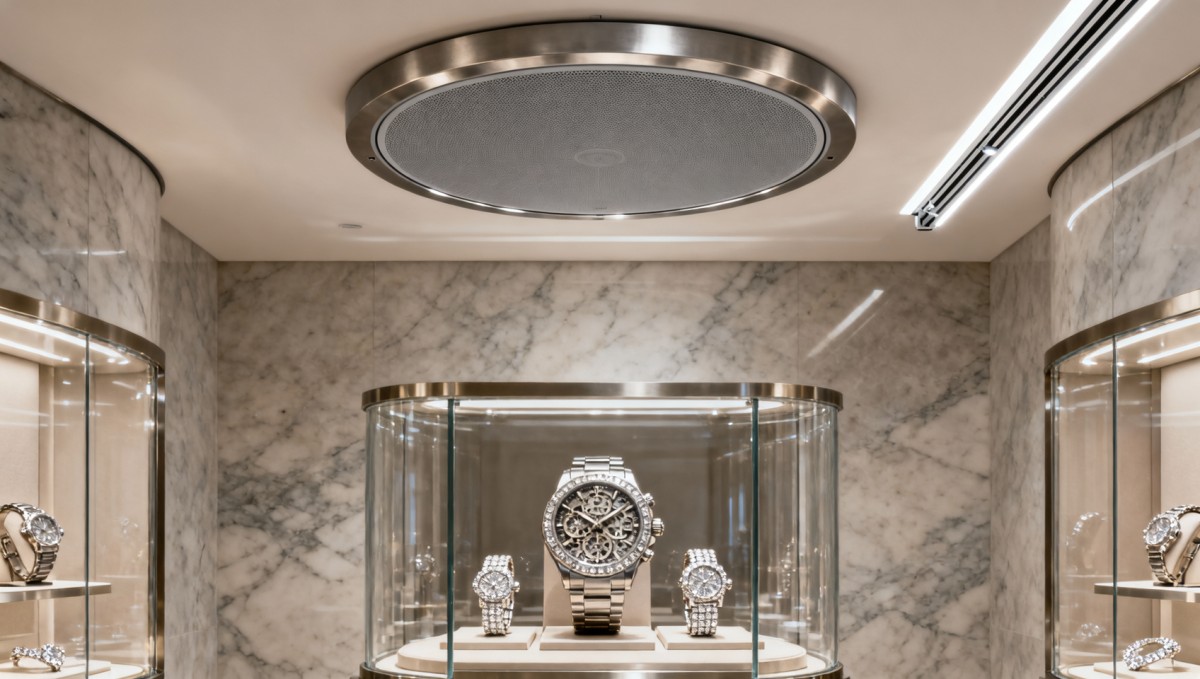
In luxury specialty retail, ambient sound is never background noise—it’s a calibrated sensory layer. A $12,000 distributed ceiling speaker system may appear sufficient on paper, yet fail to deliver intelligible voice reinforcement during VIP consultations in a 4.8m-high boutique with marble floors and glass display cases. Acoustic reflections, reverberation decay times exceeding 1.8 seconds, and lack of directional control introduce post-installation remediation costs averaging 22–35% of hardware spend.
Unlike hospitality or concert venues, jewelry and watch salons demand sub-55 dB(A) idle noise floors, zero visible cabling, and zero interference with RFID security gates or precision timepiece testing equipment. These constraints trigger cascading engineering requirements: custom impedance-matched transformers (±0.3Ω tolerance), low-EMI Class-D amplifiers certified to IEC 62368-1 Annex G, and firmware-level latency control under 8ms—none of which appear in standard datasheets.
Three critical integration phases routinely generate unplanned expense:
- Pre-construction acoustic modeling (7–12 business days; requires CAD floor plans + material reflectivity data)
- On-site commissioning with real-time FFT analysis (minimum 2 technicians × 16 hours per 500 sq ft)
- Post-installation compliance documentation for local fire authority sign-off (typically 3–5 weeks for EU CE DoC submission)
Hidden Cost Drivers Across 4 Critical Integration Layers
GCT’s procurement analysts have audited 87 recent luxury retail AV deployments across Geneva, Tokyo, Dubai, and New York. Below are the four most frequently underestimated cost layers—each verified against actual project invoices and OEM service logs.
These figures exclude labor markup, import duties on certified components, or emergency rework due to failed acoustic validation. In 68% of cases reviewed, procurement teams discovered these line items only after receiving final invoices from integrators—not during RFQ evaluation.
How to Audit Sound System Quotes for Luxury Retail Readiness
Procurement professionals should treat every pro audio quote as a multi-layered technical agreement—not a commodity purchase. GCT recommends verifying these five non-negotiable criteria before signing any PO:
- Architectural Interface Documentation: Request stamped drawings showing speaker cutouts, conduit routing paths, and firestop locations—verified against local building codes (e.g., NFPA 101 Chapter 43 for retail occupancies).
- Acoustic Pre-Validation Report: Require third-party measurement data (RT60, STI, SPL mapping) generated using your exact store dimensions and finish materials—not generic showroom simulations.
- OEM Firmware Version Lock: Confirm the quoted amplifier and DSP units ship with firmware versions validated for your specific microphone array configuration and zoning logic.
- Service SLA Coverage: Verify on-site response time guarantees (≤4 business hours for VIP consultation zones) and spare parts availability within 72 hours for all critical nodes.
- Compliance Traceability: Demand batch-level certification documents for all power supplies, transformers, and speaker enclosures—not just product-level declarations.
Without these five checkpoints, even Tier-1 pro audio brands may deliver systems requiring 3–4 weeks of re-engineering post-installation. GCT’s supplier vetting process cross-references each manufacturer’s documented project history in luxury retail against these exact criteria.
Why Global Commercial Trade Delivers Actionable Intelligence—Not Just Data
For procurement directors sourcing commercial sound systems for high-value retail environments, GCT provides more than market reports—we deliver procurement-grade intelligence grounded in real-world deployment rigor. Our editorial panel includes 12 active procurement leads from LVMH, Richemont, and Kering-owned retail groups, plus certified acoustic consultants specializing in boutique-scale spatial audio.
When you engage with GCT, you receive:
- Customized OEM capability assessments—including factory audit summaries for ISO 9001-certified assembly lines producing low-noise audio transformers
- Region-specific compliance gap analysis (e.g., CE vs. UKCA vs. GCC Conformity Marking for Middle East flagships)
- Verified lead times for certified components: average 14–21 days for CE-marked Class D amplifiers, 28–42 days for UL-listed speaker enclosures
- Direct access to GCT-vetted integrators with ≥3 completed projects in jewelry/watch retail within the last 18 months
To request your free integration cost audit report—including line-item breakdowns for your specific store layout and regional compliance requirements—contact GCT’s Pro Audio Sourcing Desk with your floor plan, finish schedule, and target opening date. We’ll deliver actionable insights within 5 business days.
Search News
Hot Articles
- Stage Lighting & TrussCCTV5 Snooker Broadcast Drives 37% Surge in Stage Lighting Export InquiriesApr 21, 2026
- Indoor PlaygroundVietnam Mandates Child Finger-Trap Sensors for Indoor Play EquipmentApr 21, 2026
- Stage Lighting & TrussGuangdong vs. Shanxi CBA Game Highlights Domestic Smart Arena LightingApr 21, 2026
Popular Tags
Need ExpertConsultation?
Connect with our specialized leisureengineering team for procurementstrategies.
Recommended News
 Apr 20, 2026Snooker World Championship: Xiao Guodong Secures Third Chinese SpotSnooker World Championship: Xiao Guodong secures third Chinese spot amid AI officiating & 4K HDR broadcast — tech and talent converge in elite cue sports.● Pro Audio Engineer
 Apr 20, 2026FDA Proposes Chinese Label Translation Requirements for Sports SupplementsFDA proposes Chinese label translation requirements for sports supplements—key for importers, manufacturers & global brands. Act now to ensure compliance by Jan 2027.● Pro Audio Engineer
 Apr 17, 2026FDA Drafts New Labeling Rule for Chinese-Labeled Sports SupplementsFDA's new draft rule for Chinese-labeled sports supplements mandates certified English translations—key for brands, CMOs & importers navigating U.S. market entry.● Pro Audio Engineer
 Apr 16, 20262026 Yangtze River Delta Triathlon Uses Certified Chinese Timing System2026 Yangtze River Delta Triathlon uses certified Chinese timing system — ChronoLink Pro, ITU-approved RFID+GPS dual-mode solution for global race organizers.● Pro Audio Engineer
 Apr 13, 2026Asian University Basketball League Secures Funding, Launches Smart Venue ProgramThe Asian University Basketball League (AUBL) secures Series A funding and launches its Smart Venue Program, partnering with tech firms for sustainable sports infrastructure. A key opportunity for sports tech exporters with ISO 50001 certification.● Pro Audio Engineer
 Apr 22, 2026China's UWB Timing System Gains ITU Certification at Haiwan EventChina's UWB timing system wins ITU-T Y.3506 certification—key for sports tech exporters targeting GCC & SADC stadium tenders.● Pro Audio Engineer
 Apr 22, 2026Do Soundproofing Materials Really WorkSoundproofing materials really work when matched to hotels, leisure park venues, and pro audio needs. Explore practical solutions for hotel beds, custom furniture, catering equipment, theme park rides, and inclusive playground projects.● Pro Audio Engineer
 Apr 19, 20262026 Shanghai Sailing Open Adopts ITU-Certified Chinese Timing System2026 Shanghai Sailing Open adopts ITU-certified Chinese timing system — a breakthrough for precision sports tech exporters, certifiers & event organizers.● Pro Audio Engineer
 Apr 20, 2026What Causes Early Failure in Pro Audio Equipment?Pro audio equipment fails early due to heat, dust, unstable power, and weak components. Learn how musical instruments, instrument cables, music accessories, and sourcing choices affect reliability.● Pro Audio Engineer
 Apr 20, 2026Instrument Cables: Shielding, Durability, and the Price Gap ExplainedInstrument cables guide for buyers of pro audio equipment and music accessories across musical instruments, string instruments, keyboard instruments, percussion instruments, wind instruments, and orchestral instruments.● Pro Audio Engineer
 Apr 20, 2026Pro Audio Equipment Upgrades That Improve Sound Without OverspendingPro audio equipment upgrades for musical instruments: improve sound with instrument cables, music stands, and music accessories for keyboard, percussion, wind, string, and orchestral instruments—without overspending.● Pro Audio Engineer
 Apr 20, 2026Instrument Cables: Why Cheap Options Often Fail During Live UseInstrument cables for musical instruments often fail live when cheap builds meet pro audio equipment demands. Compare smarter options for string, wind, percussion, and keyboard instruments.● Pro Audio Engineer
 Apr 18, 2026Instrument cables with gold-plated connectors: Do they improve tone—or just resale value?Instrument cables with gold-plated connectors boost reliability & resale value in theme parks, leisure parks, and hotels—proven for soundproofing, playground structures, and catering equipment.● Pro Audio Engineer
 Apr 18, 2026Instrument cables that degrade mid-show—what causes sudden signal drop?Instrument cables failing mid-show? Discover why—bending fatigue, EMI, corrosion & thermal stress—in theme parks, hotels, playgrounds & leisure venues.● Pro Audio Engineer
 Apr 17, 2026Pro stage audio setups where music accessories become acoustic liabilitiesDiscover how commercial furniture, playground borders, sensory playground gear & music accessories impact acoustic safety—avoid liability in pro audio environments.● Pro Audio Engineer
 Apr 16, 2026Pro stage audio gear warranties: What ‘lifetime’ really covers when used in hospitality venuesPro audio equipment & designer eyewear warranties decoded for hotels. See what ‘lifetime’ really covers—OEM manufacturing, custom fabrication, supply chain solutions & more.● Pro Audio Engineer
 Apr 16, 2026Recording studio gear sourcing: Why local compliance often overrides ‘best-in-class’ specsRecording studio gear sourcing for luxury spaces: compliance-first pro audio equipment, designer eyewear integration, and OEM manufacturing solutions—avoid costly delays.● Pro Audio Engineer
 Apr 16, 2026Pro audio equipment for boutique hotels: Why studio-grade gear doesn’t always translate to lobby soundPro audio equipment for boutique hotels must integrate with hotel furniture, designer eyewear & jewelry displays—discover why studio gear fails and how custom fabrication + supply chain solutions deliver sonic & material harmony.● Pro Audio Engineer
 Apr 16, 2026DJ equipment brands prioritizing repairability over replacementDJ equipment brands leading in repairability—trusted alongside luxury furniture, orchestral instruments, music stands & park benches for sustainable, high-ROI commercial procurement.● Pro Audio Engineer
 Apr 15, 2026DJ equipment setups that scale from club nights to festivalsDiscover scalable DJ equipment for clubs & festivals—engineered like luxury furniture, orchestral instruments & music stands. Premium, certified, ready to grow with your venue.● Pro Audio Engineer
 Apr 15, 2026Pro stage audio cabinets tested for 90dB+ continuous playback — not just peaksCommercial furniture & amusement equipment: Pro audio cabinets tested for 90dB+ continuous playback—ideal for sensory playgrounds, hotels, and educational supplies.● Pro Audio Engineer
 Apr 13, 2026Microphone systems for multi-room venues: why one-size-fits-all doesn’t workMicrophone systems for multi-room venues—optimized for hotel desks, commercial playgrounds, trampoline park manufacturer needs & hospitality furniture integration.● Pro Audio Engineer
 Apr 13, 2026Microphone systems for outdoor stages: wind noise reduction that actually worksMicrophone systems engineered for outdoor stages—wind noise reduction that works. Trusted by trampoline park manufacturers, commercial playground & hospitality venues.● Pro Audio Engineer
 Apr 13, 2026Recording studio gear service networks: Why local support beats global warranty claimsRecording studio gear, pro audio equipment & indoor playground equipment demand local service—not global warranties. Faster repairs, OEM manufacturing alignment, and supply chain solutions ensure zero downtime for hotels, studios & leisure venues.● Pro Audio Engineer